| The Journal | |||||||||||||||||||||||||||||||||||||
|
|||||||||||||||||||||||||||||||||||||
|
|
||||||||||||||||||||||||||
|
|
|||||||||||
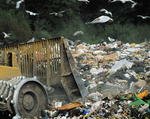
Italian “Triangle of death” linked to waste crisis Kathryn Senior and Alfredo Mazza The environmental waste problem in southern Italy is now reaching epic proportions and the problem has been linked to increasing rates of cancer. At the end of June, 2004, protestors blocked the rail links between northern and southern Italy, complaining about the re-opening of a previously condemned rubbish dump. The dump was brought back into service after household waste built up in the streets of the Campania region, causing schools to close because of the public-health risks. The region around Salerno and Naples produces more rubbish than the landfills and incinerators in the region can cope with, and organised crime in Italy has been taking advantage and turning illegal waste dumping into a lucrative business for years. Kathryn Senior and Alfredo Mazza explore the possible effect on cancer mortality in the region around the town of Nola.
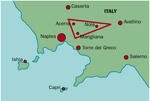
Over the past few years, the processing of industrial and urban waste has become an environmental and political issue for Italy. Recycling and disposal of waste in a safe, cost-effective way has become almost impossible. The constant increase in the amount of waste, both organic and toxic, places a great burden on ageing waste-processing plants. Many minor processing facilities designed to handle waste from small urban communities have been overwhelmed by the surplus waste they receive from other regions even less able to cope. “Even modern plants can be a health risk because they have become parking lots for huge amounts of unclassified garbage”, explains Alfredo Mazza (Clinical Physiology Unit, National Research Council, Pisa, Italy). The need to dispose of waste has, for at least the past 20 years, given organised crime in the area the opportunity to take advantage and to dump waste illegally for profit. Many landfills today are working at full potential and cannot process the waste they receive according to environmental regulations. Because of this emergency, local and regional administrations have allocated financial resources for recycling programmes and for construction of new, technologically advanced waste-processing facilities. These funds, however, have also given criminal organisations new opportunities for fraud and illegal exploitation. “Today, the difference between lawful management of waste and illegal manipulation with regard to their compliance with health regulations is very narrow, and the health risks are rising”, comments Mazza. The situation has come to the attention of the European Commission, which, in July this year, sent out warning letters to Italy about 28 cases of breaches of the European Union's environmental laws. The 5000 illegal or uncontrolled landfill sites in Italy drew particular criticism; Italy has already been warned twice for flouting the Hazardous Waste Directive and the Landfill Directive, and the EU has now referred Italy to the European Court of Justice for further action. Recognising the extent of the waste problem and trying to enforce legislation and curb the activities of the ecomafia in a bid to protect inhabitants of affected areas is only part of the story. Few studies have been done on the effect of waste treatment on human health, and assessing the health effect generally and the effect on cancer incidence and mortality is likely to be a difficult task. In the 1990s, Goldberg and colleagues (Montreal, Canada) suggested that men living near a municipal solid-waste landfill site in Montreal were at a higher risk of developing cancer of the liver, kidney, pancreas, and non-Hodgkin's lymphoma.1,2 More recently, studies have shown that living close to a waste-incineration plant is associated with an increase in cancer incidence. Comba and colleagues3 reported that residence within a 2-km radius of an industrial waste incinerator in Mantua, Italy, was associated with a significant increase in risk of soft-tissue sarcomas. The evidence suggested a causal role for 2,3,7,8-tetrachlorodibenzo-p-dioxin.3 Stefano Parodi (Epidemiology and Biostatistics Section, Scientific Directorate, G Gaslini Children's Hospital, Genoa, Italy) and colleagues looked at lung cancer mortality in two regions of northern Italy exposed to environmental pollution emitted by a coal-fired power station and other industrial sources, including a waste incinerator. In women, the results suggested a pollution-related risk, but in men, the results were confounded by occupational exposure and a greater tendency to smoke.4 “Nevertheless, the pollution-related risk observed in females is an important clue that deserves further epidemiologic attention”, says Parodi. Paolo Vineis, an environmental epidemiologist in the Department of Epidemiology and Public Health, Imperial College, London, UK, has coordinated a study on air pollution and cancer in Europe. This was nested within the large European Prospective Investigation into Cancer and Nutrition (EPIC)—a study of more than 500 000 people in ten European countries—devised to investigate the relation between diet, metabolic and genetic factors, and cancer. “We are analysing the data now, but what is clear is that Italy has a particularly high level of exposure to traffic-related pollution”, he explains. Studies done in Florence, Pisa, Milan, Rome, Torino, and other locations have suggested an association between air pollution and children's respiratory conditions. “However”, agrees Vineis, “little research has been done on the issue of waste and health. In Italy, specific landfill sites have been investigated, related to industrial activities, in particular in Caffaro, Brescia and Montedison, Mestre, but research is only partially published or unpublished”. “A little is known about how landfills affect human health when regulations are followed, but we have absolutely no idea what effects landfills are having when regulations are overwhelmed or openly flouted”, comments Mazza. Thorough epidemiological studies on the possible associations between teratogenesis and waste pollutants are needed urgently so that the findings can be used to define safe regulations that should be instated for contaminating landfills, he adds. In the meantime, data from the Cancer Registry of the Sanitary Local Unite (ASL) Naples 4 in Italy is alarming. The report of the Registry of Tumours in February, 2002, showed that mortality for colorectal and liver cancer, and leukaemia and lymphoma, were higher in District 73 than in the rest of the ASL NA4 health region (see table ). This district is in the eastern region of Campania, which has one of the worst records of illegal environmental activity in Italy, largely due to the Camorra, the indigenous mafia. The region, which has become known as the “Triangle of death”, has its three points at the three towns of Nola, Marigliano, and Acerra (see figure ). All three used to be important agricultural centres but this part of Campania has been used for illegal waste dumping by the ecomafia for so long that the land is now practically unuseable. Data from the Italian forestry department gives the total amount of waste in the region as 277 500 m3 but, in reality, Mazza thinks that this is “just the tip of the iceberg”. “250 000 [people in this region] have been exposed to toxic pollutants for decades. Pollutants in the air, water, and in produce from the area, are well above regulation levels”, he points out.
Mazza notes that the data also shows a very high level of liver cancer, leukaemia, and lymphoma in ASL NA4 compared with rates seen in Campania and in Italy as a whole. In women, the pattern is very similar with regard to liver cancer, and cancer of the breast, nervous system, colorectal area, and leukaemia and lymphoma are higher in District 73 than in the rest of ASL NA4. Mazza is convinced that there is a link between the level of pollution caused by inadequate waste-control methods and illegal dumping and the high level of cancer mortality in the region. Previously, Italy had higher rates of cancer incidence and mortality in the northern-central part of the country with lower rates in the southern area. Since the 1980s, better diagnosis and treatment has improved survival and has decreased cancer mortality in Italy as a whole. However, Mazza stresses that this general trend has not occurred in Campania, particularly in ASL NA4, where cancer mortality has continued to rise in the period between 1970 and 1974, and between 1995 and 2000. “Although the incidence and mortality rates for most cancers in the area around Nola are generally still lower than in northern Italy, the trend towards an increase in mortality is closing this small gap and the much higher mortality from liver cancer and leukaemia and lymphoma is very worrying”, says Mazza. All agree that the link between hazardous waste disposal and cancer mortality needs to be investigated urgently. Vineis stresses that prudence should be exercised in commenting on this data because no confidence interval is provided. “I think that several types of epidemiological study designs could be used to identify a link between environmental pollution and cancer, for example case-control studies. Cancer registration and small-area studies are a first step but they can only lead to hypothesis generation; much confirmatory work will be required”, says Vineis. Parodi argues that the activity of the Cancer Registries in Italy should be extended at a national level, as happens in most other northern European countries, to encourage both descriptive and analytical studies. But Mazza thinks that more dramatic measures are now needed. “The right to health, guaranteed by the Italian Constitution, is seriously compromised in the province of Nola. The National Health System must put in place a screening programme with clinical, chemical, biochemical, and genetic analyses to evaluate the true risks to people in this territory”, he says. Mazza suggests that it would be reasonable for the government to declare a state of emergency and, if necessary, to moblise Armed Forces, “before Nola is condemned as a ‘contaminated area’ and suffers the socioeconomic, or even violent consequences, of a population exasperated by the crisis”. References 1 Goldberg MS, al-Homsi N, Goule L, Riberdy H. Incidence of cancer among persons living near a municipal solid waste landfill site in Montreal, Quebec. Arch Environ Health 1995; 50: 416-24. [ PubMed] 2 Goldberg MS, Siemiatyck J, DeWar R, et al. Risks of developing cancer relative to living near a municipal solid waste landfill in Montreal, Quebec, Canada. Arch Environ Health 1999; 54: 291-96. [ PubMed] 3 Comba P, Ascoli V, Belli S, et al. Risk of soft tissue sarcomas and residence in the neighbourhood of an incinerator of industrial wastes. Occup Environ Med 2003; 60: 680-83. [ PubMed] 4 Parodi S, Baldi R, Benco C, et al. Lung cancer mortality in a district of La Spezia (Italy) exposed to air pollution from industrial plants. Tumori 2004; 90: 181-85. [ PubMed] |
|||||||||||||||||||||||||||||||||||||||||||||||||||||||||||||||||||||||||||||||||||||||||||||||||||||||||||||||||||||||||||||||||||||||||||||||||||||||||||||||||||||||||||||||||||||||||||||||||||||||||||||||||||||||||||||||||||||||||||||||||||||||||||||||||||||||||||||||||||||||||||||||||||||||||||||||||||||||||||||||||||||||||||||||||||||||||||||||||||||||||||||||||||||||||||||||||||||||||||||||||||||||||||||||||||||||||||||||||||||||||||||||||||||||||||||||||||||||||||||||||||||||||||||||||||||||||||||||||||||||||||||||||||||||||||||||||||||||||||||||||||||||||||||||||||||||||||||||||||||||||||||||||||||||||||||